Professional China Source OEM Service Supplier
L2 Waterproof Connector
The L2 connector family – known for its compact circular design, screw-coupling mechanism, and IP67/IP68 sealing – is widely used in outdoor LED lighting, marine electronics, and industrial sensors. Below we share critical selection criteria from a supplier’s viewpoint.
2/13/20262 min read
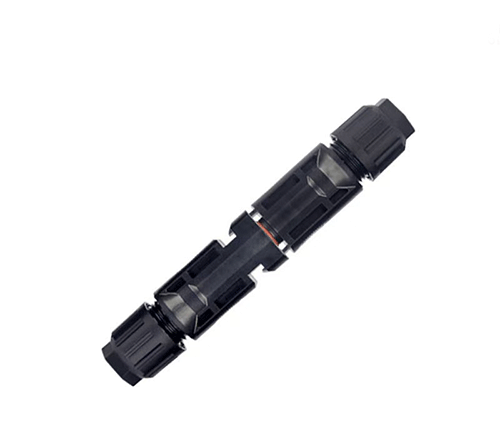
As a supplier specializing in harsh-environment interconnect solutions, we frequently handle requests for L2 series waterproof connectors. The L2 connector family – known for its compact circular design, screw-coupling mechanism, and IP67/IP68 sealing – is widely used in outdoor LED lighting, marine electronics, and industrial sensors. Below we share critical selection criteria from a supplier’s viewpoint.
1. Understanding the L2 Standard
L2 is not an IEC or UL classification but a recognized industry form factor (compatible with many Japanese-origin designs). It typically features 2–12 pins, outer diameter 12–20mm, and a bayonet or threaded coupling. Before ordering, confirm dimensional compatibility with your mating connector.
2. Pin Count and Current Rating
Common L2 variants: 2+2 (power+signal), 3, 4, 6, 9 pins. Signal contacts carry 2–5A; power contacts (larger gauge) up to 10A per pin. For currents above 10A, we recommend moving to a larger series (e.g., L3 or M19). Always request derating curves for elevated ambient temperatures.
3. IP Rating – Don’t Overlook Assembly
While L2 housings claim IP67 (immersion up to 1m) or IP68 (continuous), real-world sealing depends on proper cable assembly. Choose connectors with integral molded gaskets and specify cable O-ring sizes that match your jacket diameter. For IP68, we recommend pre-molded overmolded cables – field-wireable versions often leak after vibration.
4. Contact Plating and Base Material
Gold-plated brass or phosphor bronze (0.76µm min) is essential for low-level signals and salt-fog environments (marine). Tin-plated contacts are acceptable for dry indoor applications but may fail under high humidity or micro-vibration. For power pins, silver plating improves conductivity but tarnishes; gold is still safer.
5. Housing Materials
PBT/PA66 + glass fiber: lightweight, cost-effective, UV-resistant for outdoor.
Nickel-plated brass: rugged, excellent EMI shielding, but heavier.
Stainless steel: for corrosive chemical or high-salt environments.
For LED streetlights, plastic housing with metal coupling nut offers best value.
6. Locking and Mating Cycle Life
L2 primarily uses threaded coupling (screw lock). Ensure threads are stainless steel or plated brass to prevent galling. Mating cycle life: quality L2 achieves 500+ cycles; budget versions may fail under 200. Ask for insertion/withdrawal force test reports.
7. Termination Styles
Solder cup: most reliable for field assembly, requires skill.
Screw terminal: tool-less, but bulkier, not for vibration.
Crimp: ideal for automated assembly, needs specialized tool.
PCB straight/right-angle: for on-board mounting.
We maintain stock of all termination versions for quick sampling.
8. Supplier’s Practical Checklist
Always verify O-ring material (silicone for -40°C to +150°C, EPDM for outdoor).
For outdoor LED drivers, request UV testing (ASTM G154).
Avoid mix-and-match across different brands – L2 dimensions are not 100% standardized.
Specify strain relief: most L2 connectors lack integrated backshells; order separate cable glands.
From our failure analysis returns, 70% of L2 failures are due to improper cable clamping or O-ring misalignment. We provide fully tested L2 cable assemblies with IP68 verification. Contact us for free sample kits.
Aureate Technology
Explore our sleek website template for your industrial products
Contact
Inquiry
aureatetech@126.com
008613363961067
© 2024. All rights reserved.