Professional China Source OEM Service Supplier

XLR Connector Applications
Standard 3-pin XLR (pin1 ground, pin2 hot+, pin3 cold-). For lighting (DMX512) use 5-pin XLR (secondary pair for data return). Never substitute 3-pin for DMX – violates standard and risks equipment damage.
Jacky Duan
2/27/20262 min read
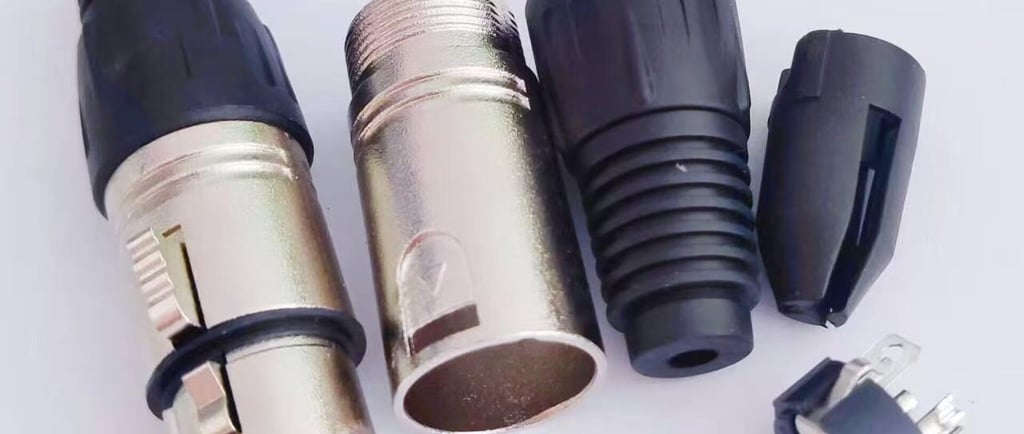
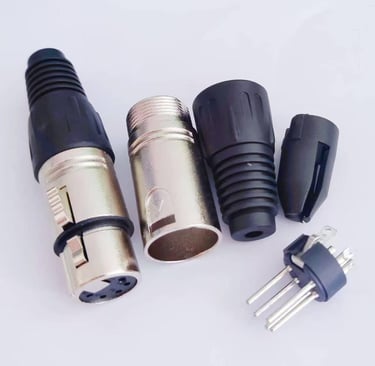
In the professional audio world, XLR connectors are the undisputed standard for balanced audio and DMX lighting control. As a supplier to sound engineers, equipment manufacturers, and rental houses, we emphasize the following selection parameters to ensure noise-free transmission and mechanical longevity.
1. Pin Configuration and Polarity
Standard 3-pin XLR (pin1 ground, pin2 hot+, pin3 cold-). For lighting (DMX512) use 5-pin XLR (secondary pair for data return). Never substitute 3-pin for DMX – violates standard and risks equipment damage.
2. Contact Material and Plating
Phosphor bronze or beryllium copper contacts with hard gold plating (1.27µm min) are mandatory for low-contact-resistance and corrosion resistance. Avoid nickel-only plating – prone to oxidation and signal degradation.
3. Shell Material and Durability
Zinc alloy die-cast: rugged, heavy, best EMI shielding
Nickel-plated brass: good balance of strength and weight
Plastic/PBT: budget-friendly, for light-duty use (home studio)
For touring/stage applications, always choose metal shells with positive latch release.
4. Latch and Locking Mechanism
Standard push-button latch provides secure retention but requires accessible button. For rack-mount or confined spaces, consider silicone grip or no-latch versions. Verify latch spring strength – weak springs cause accidental disconnects.
5. Termination Style
Solder cup: most common, reliable, field repairable
PCB mount: horizontal/vertical for internal gear
IDC/insulation displacement: factory mass production only
We recommend soldering with silver-bearing solder and using heat shrink for strain relief.
5b. Cable Clamp and Strain Relief
Critical for reliability. Choose connectors with double-clamp design (separate clamp for braid and inner jacket). Ensure the clamp fits your cable diameter (4–8mm typical).
6. Environmental and IP Ratings
Standard XLR is IP40. For outdoor events or damp stages, specify weather-resistant XLR with internal seals and rubber boot (IP65). Also consider corrosion-resistant black chrome or stainless steel shells.
7. Electrical Performance
Look for: contact resistance <5mΩ, insulation resistance >1GΩ, dielectric strength 1500VAC. For microphone-level signals, even tiny resistance changes cause audible noise.
8. Supplier’s Practical Advice
Avoid cheap counterfeit XLRs – they use steel contacts (magnetic!) and weak latches.
Mate/unmate cycle life: genuine XLRs achieve 5000+ cycles, fakes often fail under 500.
For silent mating, some Neutrik-compatible clones offer "smooth action" latches. Always test with your panel cutouts (D-shaped mounting hole).
As a supplier, we pre-test contact insertion force and latch retention. For high-reliability projects (broadcast, live sound), we stock gold-plated, die-cast XLRs with double strain relief. Contact us for sample kits.
Aureate Technology
Explore our sleek website template for your industrial products
Contact
Inquiry
aureatetech@126.com
008613363961067
© 2024. All rights reserved.